

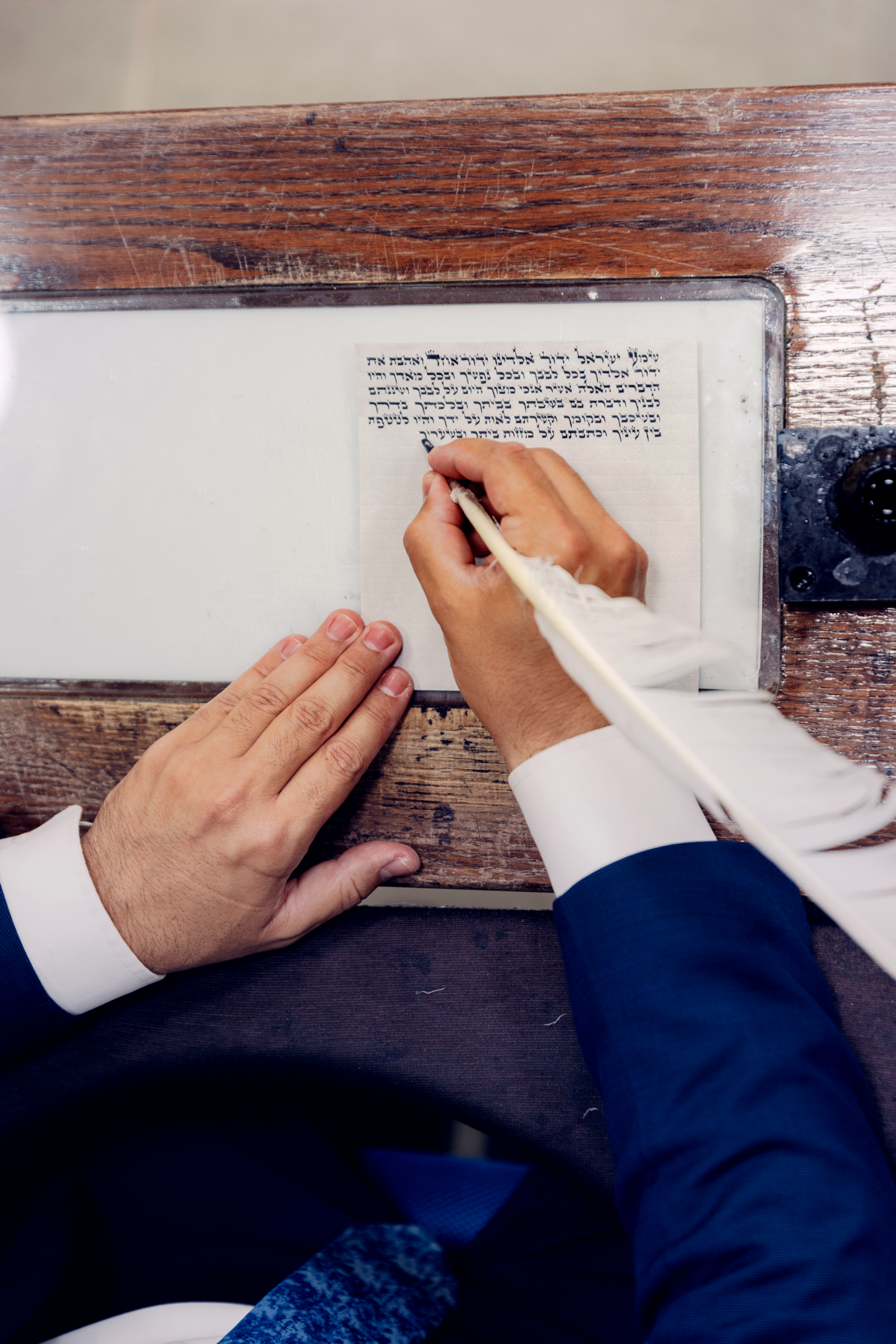

It takes:
22 Lines
713
Letters
Letters
4,649
Laws
for an ordained
scribe to write a
kosher mezuzah.

Blessing for
Affixing a Mezuzah
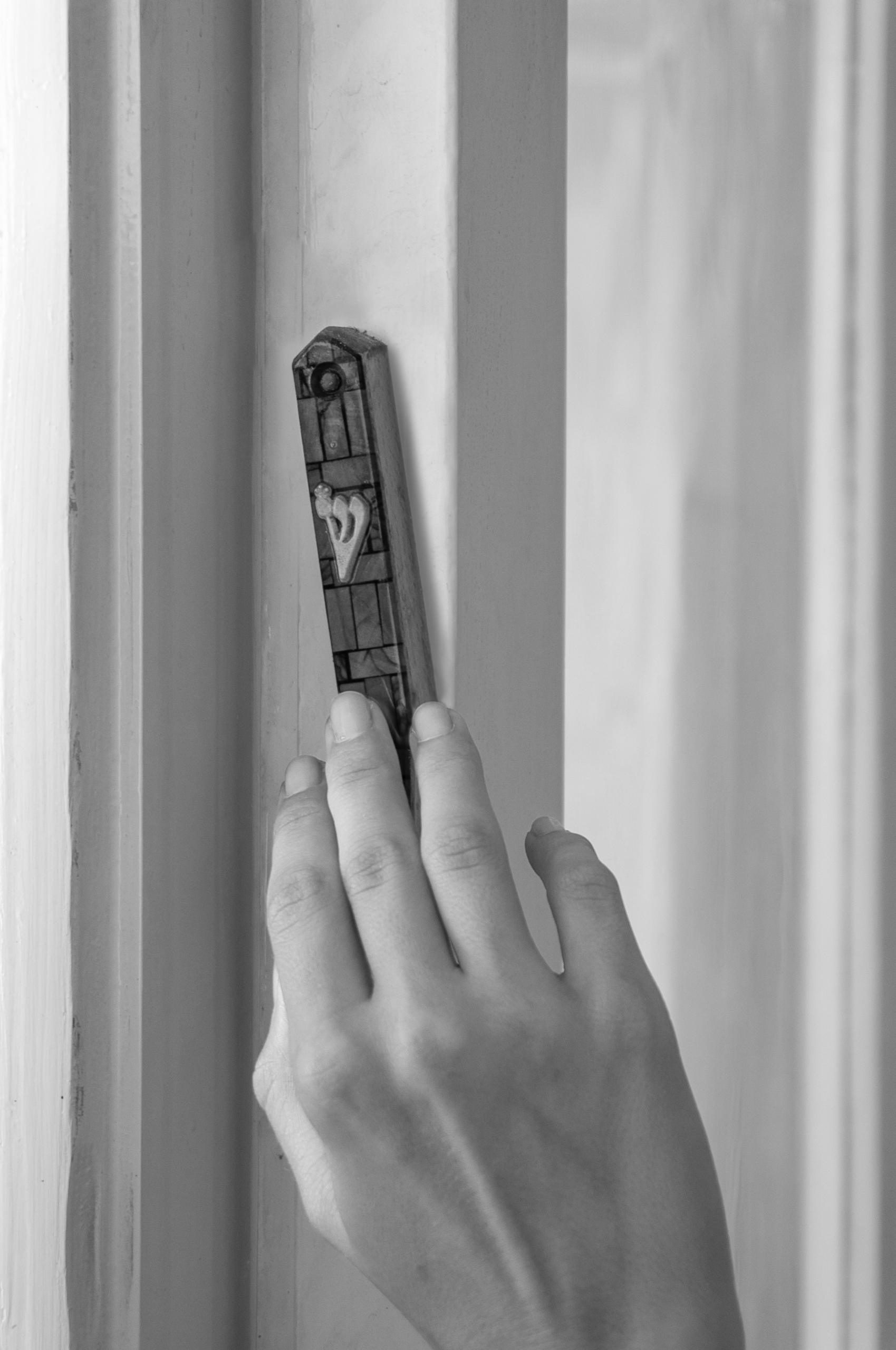
Before placing the mezuzah on the doorpost,
recite the following blessing immediately before affixing it:
בָּרוּךְ אַתָּה ה’, אֱ-להֵינוּ מֶלֶךְ הָעולָם
אֲשֶׁר קִדְּשָנוּ בְּמִצְותָיו וְצִוָּנוּ לִקְבֹּעַ מְזוּזָה
Transliteration:
Baruch atah Ado-nai Elo-heinu Melech ha’olam, asher kid’shanu b’mitzvotav v’tzivanu lik’boa mezuzah.
Translation:
Blessed are You, L‑rd our G‑d, King of the Universe, Who has sanctified us with His commandments and commanded us to affix a mezuzah.
NOTE: If affixing more than one mezuzah at the same time, the blessing is recited only once.

Why do we affix
a Mezuzah?
In addition to being a mitzvah (Biblical commandment), the mezuzah reminds us that spirituality belongs in our homes and workplaces, not just our synagogues.
It proclaims that G‑d’s presence belongs at the center of our daily lives. Every time we pass through a doorway and see or touch the mezuzah, often kissing our fingertips, it reminds us that we are never alone: G‑d’s protection is with us always.
Our sages teach that the mezuzah is like a spiritual helmet, shielding those who dwell in the home, both inside and out.
The Torah promises:
…לְמַעַן יִרְבּוּ יְמֵיכֶם וִימֵי בְנֵיכֶם עַל הָאֲדָמָה
“So that your days and the days of your children will be prolonged…”
(Deuteronomy 11:21)
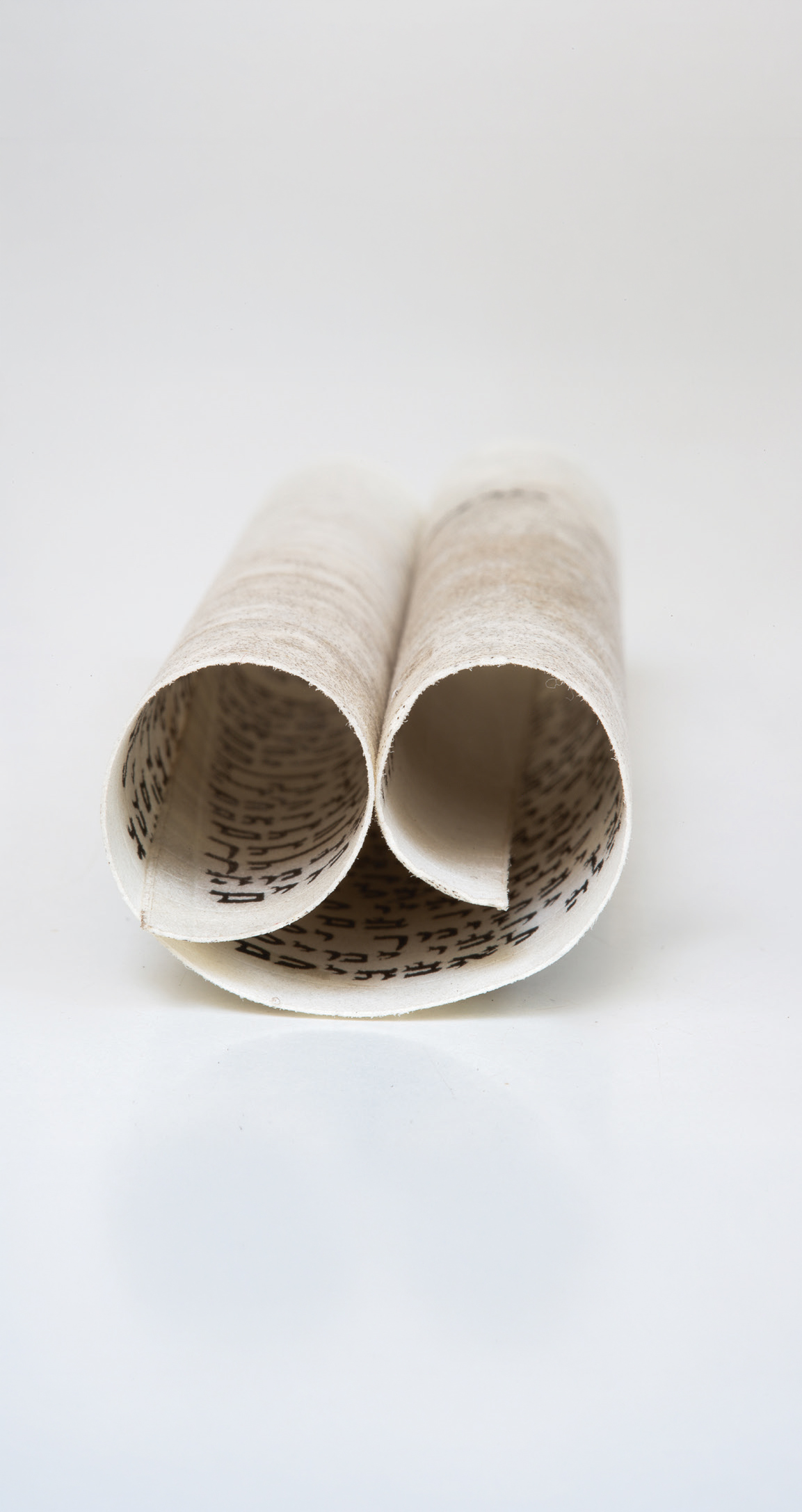
וּכְתַבְתָּם עַל־מְזוּזוֹת בֵּיתֶךָ וּבִשְׁעָרֶיךָ לְמַעַן יִרְבּוּ יְמֵיכֶם וִימֵי בְנֵיכֶם עַל הָאֲדָמָה אֲשֶׁר נִשְׁבַּע ה׳ לַאֲבֹתֵיכֶם לָתֵת לָהֶם
And you shall inscribe them on the doorposts of your house and on your gates–so that your days may be prolonged on the land which the L-rd swore to your forefathers to give to them
Mezuzah Maintenance
Mezuzahs should be checked by a qualified scribe at least twice every seven years. Even if the scroll was kosher when first purchased, natural aging or damage can compromise its validity.
The Lubavitcher Rebbe, Rabbi Menachem M. Schneerson, of righteous memory, encouraged those experiencing difficulties, whether in health, livelihood, or family matters, to have their mezuzahs and tefillin checked as a spiritual remedy.
Purchasing Kosher
Mezuzah Scrolls
A kosher mezuzah scroll, carefully handwritten by a trained scribe, typically ranges in price from $60 to $200 or more, depending on size, script, and quality. To purchase a kosher mezuzah or to have your scrolls checked, contact your local Chabad Center, or order from a trusted scribe or Judaica source.
Start with the front door, and work toward placing a mezuzah on every eligible doorway, surrounding yourself and your loved ones with ongoing holiness and protection.
